
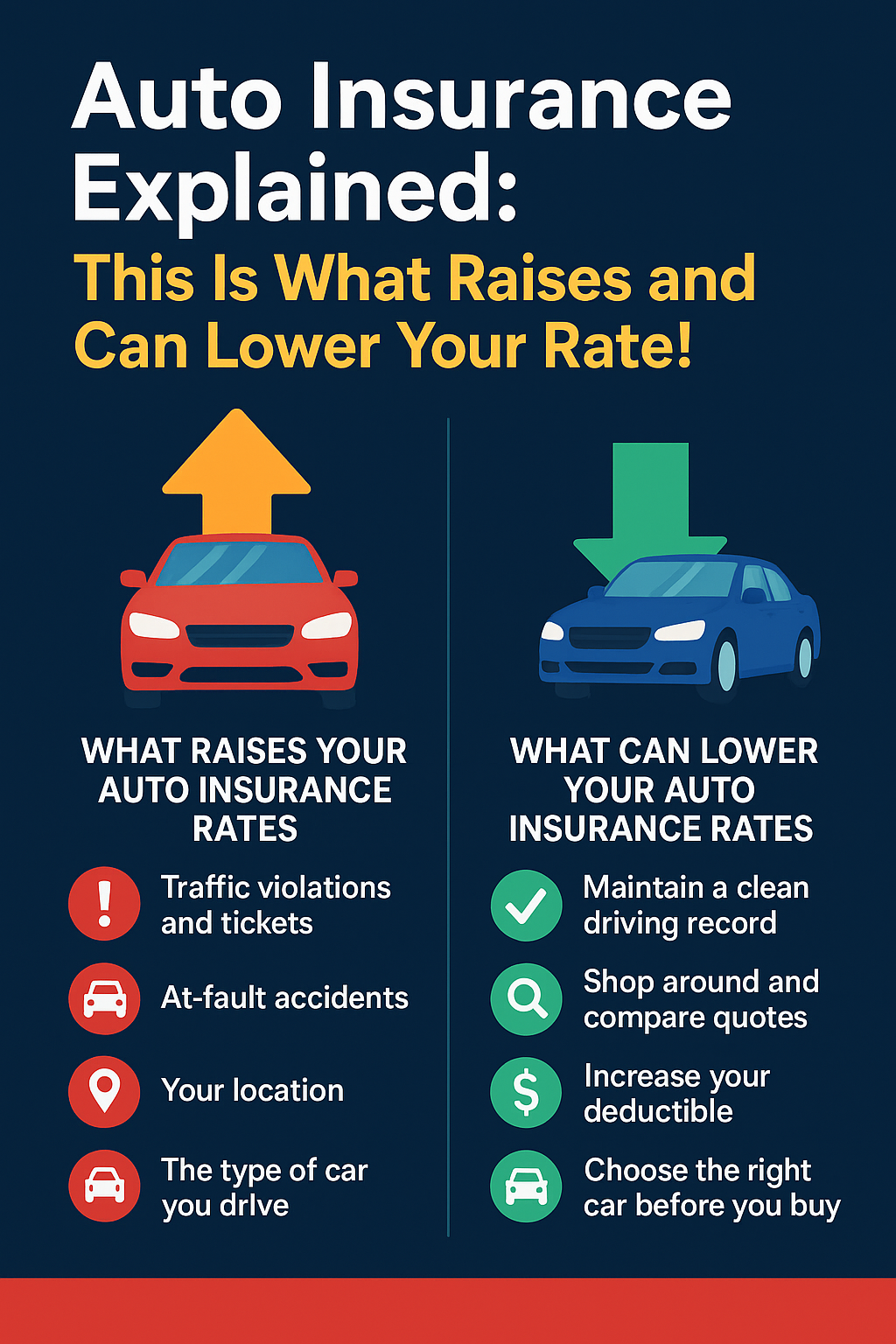
Auto Insurance Explained: This Is What Raises and Can Lower Your Rate!
Auto insurance is one of those monthly expenses that many people pay without fully understanding. You buy a policy, set it on auto-pay, and hope you never have to use it. But behind the scenes, your insurance company is constantly analyzing your risk and adjusting how much you pay. Ever wondered why your premium suddenly went up? Or how some people seem to pay much less than others for similar coverage?
In this article, we’ll clearly explain what affects your auto insurance rates, what causes them to rise, and—most importantly—what you can do to lower your costs without sacrificing coverage.
What Is Auto Insurance and Why Are Rates Different for Everyone?
Auto insurance is a contract between you and an insurance company. You pay a premium, and in return, the insurer agrees to cover certain financial losses if you’re involved in an accident, your car is stolen, or it gets damaged.
Not everyone pays the same amount because insurance companies calculate risk. In simple terms, the riskier you appear to be as a driver, the more you’ll pay. If you’re considered low-risk, your premiums are usually lower.
They use complex algorithms and data based on millions of drivers to predict how likely you are to file a claim. These predictions are influenced by your personal details, driving behavior, vehicle type, and even where you live.
What Raises Your Auto Insurance Rates?
There are several common factors that can cause your auto insurance premium to increase.
1. Traffic Violations and Tickets
Speeding tickets, running red lights, reckless driving, and other moving violations are major red flags for insurance companies. Each violation tells insurers that you are more likely to be involved in an accident.
Even a single speeding ticket can raise your rate by 20% to 40%, depending on your location and insurance provider. More serious violations, such as DUI or repeated offenses, can cause your premiums to double or even triple.
2. At-Fault Accidents
If you’re found at fault for an accident, your insurance rate almost always increases. Insurers see this as proof that you’re a higher risk.
The increase depends on:
- The severity of the accident
- The cost of the claim
- Whether injuries were involved
- How many previous accidents you’ve had
Even small fender-benders can affect your premium for three to five years.
3. Your Driving History
Your long-term driving record plays a huge role. Drivers with a clean record for many years usually get the best rates. On the other hand, a history of violations, accidents, or insurance claims makes insurers cautious.
The longer your safe driving history, the more trust insurers have in you.
4. Your Location
Where you live has a surprisingly big impact on your insurance cost. Urban areas usually have higher premiums than rural areas because of:
- Higher traffic congestion
- Increased accident risk
- Higher theft and vandalism rates
Even your ZIP or postal code can affect your rate more than your personal driving skills.
5. The Type of Car You Drive
Not all cars are equal in the eyes of insurance companies.
Cars that generally cost more to insure include:
- Luxury vehicles
- Sports cars
- Cars with expensive parts
- Models with high theft rates
On the other hand, vehicles with strong safety ratings and lower repair costs tend to be cheaper to insure.
6. Your Age and Driving Experience
Younger drivers, especially teenagers, generally pay more because they lack experience. Statistics show they are more likely to be involved in accidents.
Rates usually decrease as drivers enter their mid-20s and maintain a clean driving record. However, very elderly drivers may also see rate increases due to slower reaction times.
7. Credit Score (In Many Countries)
In many regions, your credit score can affect your auto insurance rate. Insurers believe that people with higher credit scores are more likely to make responsible decisions and file fewer claims.
Poor credit can significantly raise your premium—even if you’ve never had an accident.
8. Gaps in Insurance Coverage
If you let your insurance lapse or cancel your policy for a while, insurers view you as a higher risk when you try to get coverage again. Continuous coverage shows responsibility and stability.
9. High Mileage Driving
The more you drive, the higher your risk of being in an accident. If you use your car for long commutes or frequent travel, your insurer may charge you more.
10. Filing Too Many Claims
Even if accidents are not your fault, filing multiple claims in a short period can raise your rates. Insurers may think you’re a high-maintenance customer.
What Can Lower Your Auto Insurance Rates?
The good news is that there are many proven ways to lower your auto insurance costs.
1. Maintain a Clean Driving Record
Safe driving is the most powerful way to keep your rates low. Avoid speeding, aggressive driving, and risky behaviors. Many insurers offer safe-driver discounts after a few years of clean driving.
2. Shop Around and Compare Quotes
Insurance rates can vary dramatically from company to company. One insurer may see you as low risk, while another may consider you high risk.
Comparing multiple quotes every year can help you find cheaper coverage for the same protection.
3. Increase Your Deductible
Your deductible is the amount you pay out of pocket before insurance kicks in. Choosing a higher deductible can significantly lower your monthly premium.
Just make sure you have enough savings to cover the deductible if you ever need to file a claim.
4. Bundle Your Insurance Policies
Many companies offer discounts if you bundle multiple policies, such as:
- Auto insurance
- Home insurance
- Renters insurance
This can result in major savings.
5. Take Advantage of Discounts
You may qualify for discounts such as:
- Good driver discounts
- Student discounts
- Defensive driving course discounts
- Low-mileage discounts
- Military or professional organization discounts
Always ask your insurer what discounts are available.
6. Improve Your Credit Score
If credit-based insurance scoring is used in your area, improving your credit score can lower your premium over time. Paying bills on time and reducing debt can make a difference.
7. Install Safety and Anti-Theft Devices
Cars equipped with safety features like:
- Anti-lock brakes (ABS)
- Airbags
- Anti-theft alarms
- GPS tracking devices
often qualify for lower insurance rates because they reduce risk of injury and theft.
8. Choose the Right Car Before You Buy
Before purchasing a new vehicle, check its insurance costs. Some cars look affordable but are very expensive to insure.
Generally cheaper-to-insure cars include:
- Mid-size sedans
- Family-friendly SUVs
- Cars with strong crash-test ratings
9. Reduce Your Annual Mileage
If you can carpool, work remotely, or use public transport, you can lower your mileage and potentially qualify for low-mileage discounts.
10. Use Usage-Based or Telematics Programs
Many insurers offer programs that track your driving behavior through a mobile app or device. Safe behaviors like:
- Smooth braking
- Avoiding late-night driving
- Consistent speeds
can earn you discounts.
How Often Do Auto Insurance Rates Change?
Your rate is not fixed forever. Most insurers review and can adjust your premium:
- At every policy renewal
- After accidents or tickets
- When you move to a new location
- When you change vehicles
That’s why staying proactive is important if you want to keep your costs under control.
Common Myths About Auto Insurance Rates
Myth 1: Red Cars Cost More to Insure
This is false. Color has nothing to do with your premium.
Title Page Separator Site title
Myth 2: Older Cars Are Always Cheaper to Insure
Not always. Some older cars lack safety features and may cost more to insure for liability.
Myth 3: Full Coverage Means Everything Is Covered
“Full coverage” is not an official term. Every policy has limits and exclusions, so it’s important to understand your actual coverage.
Final Thoughts
Auto insurance rates are not random. They are based on risk, behavior, and data. Things like tickets, accidents, vehicle choice, and location can raise your premium, while safe driving, smart shopping, and good habits can help lower it.
The most powerful thing you can do is stay informed. The more you understand what impacts your rate, the more control you have over how much you pay.
With the right knowledge and a few smart choices, you can protect yourself, your car, and your wallet at the same time.
